
Food Processing
A bacon processing plant in Texas determined transient voltage-related issues cost them more than $30,000 in replacement parts and more than $10,000 in lost revenue annually. One year after implementing Maxivolt transient voltage mitigation strategy, the client reported replacement part expenses due to transient voltage had reduced to $0.

Water Treatment
After storms decimated their equipment, a water authority decided to protect their assets with a Maxivolt transient voltage mitigation system.

Industrial Surge Protection for Manufacturing Facilities
A manufacturer found that they were spending $80,000 annually on equipment repairs and production downtime caused by transient voltage. Maxivolt conducted a comprehensive evaluation and designed a customized industrial surge protection strategy to protect their manufacturing equipment and electrical systems.

Surge Protection Solutions for Oil & Gas Production Equipment
Reduce Downtime, Protect Equipment, & Stabilize Oilfield Production Protect critical oilfield production equipment, including ESPs, rod pumps, compressors, PLCs, VFDs, SCADA systems, and control panels,

Prevent Groundwater Pump Failures & Reduce Downtime by Mitigating Transient Voltage
A groundwater production operator realized a five-fold return on investment after implementing Maxivolt surge protection solutions, saving them $35,000 in just a week.

Industrial Lighting Failure Prevention in High-Use Facilities
In a semiconductor manufacturing facility, Maxivolt solutions reduced annual lighting replacement costs by more than 40%, delivering ROI in approximately five months after a $2,250 installation investment.
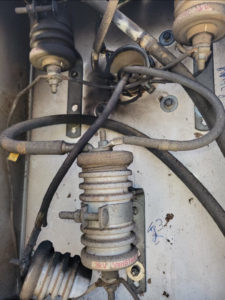
Can Lightning Arresters Protect My Medium Voltage Equipment?
No, lightning arresters are not sufficient for medium-voltage equipment protection.
They’re built to handle high-energy lightning surges and protect rugged utility equipment like transformers. But the threats that actually damage your equipment—repetitive transient voltage generated inside your facility—are a different problem entirely.

Surge Protection Industry Terminology Explained
SPD. TVSS. I(n). kA. MCOV. VPR. SCCR. The surge protection industry is a virtual swamp of alphabet soup.
Most SPD specifications describe device capability under controlled conditions. Very few describe system behavior. Effective surge protection is determined by how the device interacts with the electrical system, not how it performs in isolation.
Below we’ve compiled the definitions to these (and more) to help electricians, maintenance personnel, and engineers wade through industry jargon.

Why Choose Maxivolt As Your Surge Protector Manufacturer
Maxivolt is an American surge protector manufacturer that produces custom and standard industrial and commercial solutions to protect against transient voltage.

Why Power Outages Cause Equipment Failure
Power outages don’t just interrupt operations — they can trigger transient overvoltage events that damage and/or destroy equipment, and cause equipment malfunctions. Understanding why this happens and how to prevent it is critical for reliability, uptime, and safeguarding sensitive assets.

Transient Voltage Threatens EV Charger Reliability
Transient voltage events—short, high-voltage spikes—pose a serious threat to EV charging systems. Left unaddressed, these disturbances can degrade, disrupt, or even destroy sensitive components in both chargers and connected vehicles.

Diagnosing “Ghost Faults”
Ghost faults—also sometimes called phantom or elusive faults—are intermittent electrical anomalies that cause unexpected and unwanted behavior in equipment (e.g. nuisance trips, resets, flickers).

3 Must-Haves for Power Quality
Protect equipment and reduce downtime with three power quality essentials: transient voltage mitigation, harmonic control, and proper grounding. Learn how a layered approach improves reliability, efficiency, and asset life.
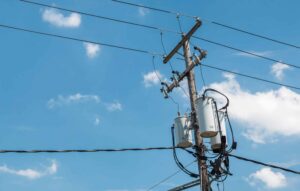
Transformers Do Not Stop Transient Voltage
Transformers are a staple in electrical systems, stepping voltage up or down as needed. But when it comes to one of the most prevalent power quality threats—transient overvoltage—transformers fall short. Here’s why that matters more than one might think.
